


Choosing between a gunite vs fiberglass pool is one of the biggest decisions in a backyard project. Both can look great. Both can last for many years. But they are built in very different ways, and that changes what you can design, how you care for the pool, and how the finished space feels.
In this guide, we explain each pool type in plain language. You will learn how they are made, how they compare, and who each one suits best. By the end, you should feel ready to pick the right direction for your home.
What Is a Gunite Pool
A gunite pool is a concrete pool built on your property. The crew digs the hole and builds a steel frame. Then concrete is sprayed over the frame to form the pool shell.
After the shell cures, tile, coping, and an interior finish are added.
You may also hear the word shotcrete. It is very similar to gunite, and both create a strong, custom shell.
At Currin Outdoor Living, our custom pools use shotcrete or gunite for the permanent shell. See the full process on our pool building page.
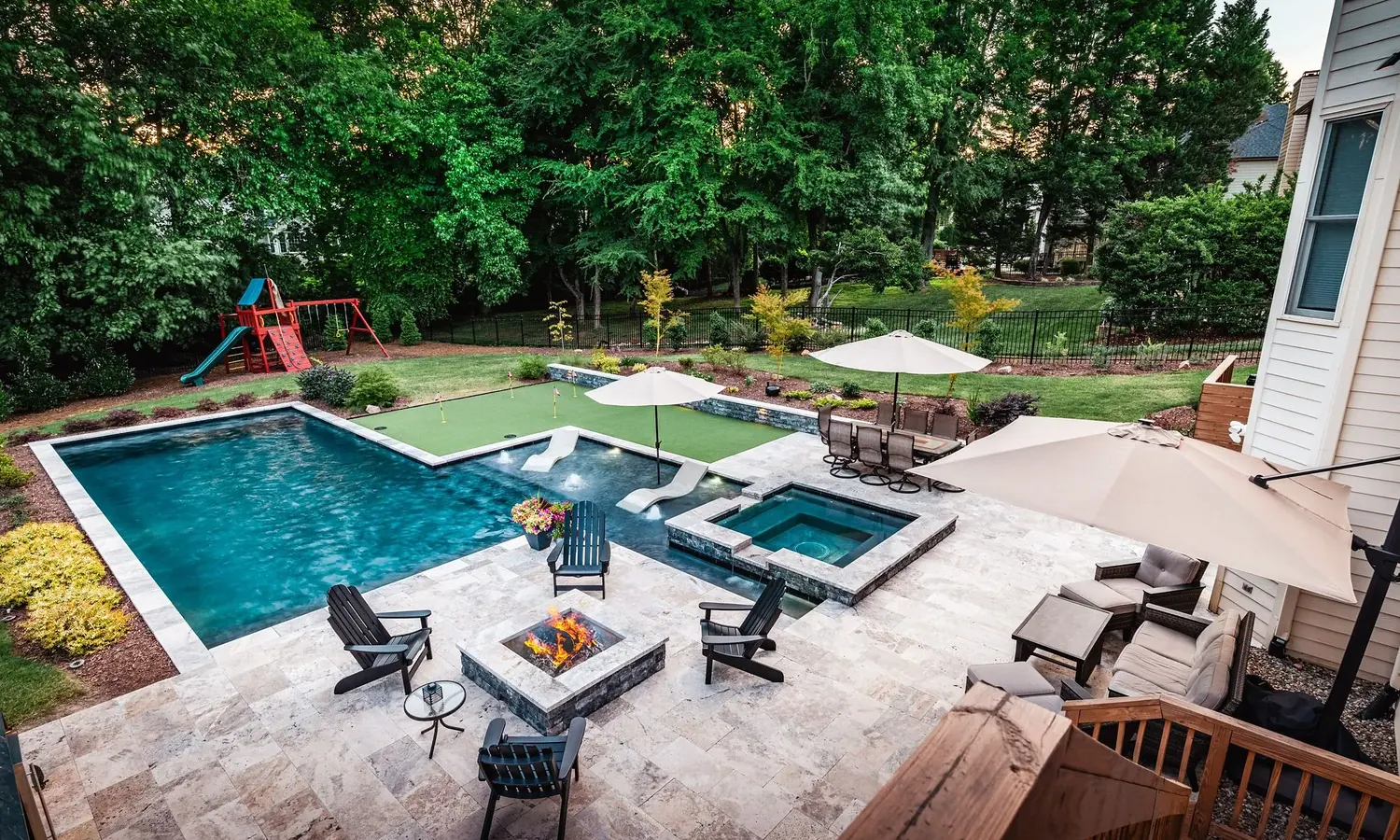
What Is a Fiberglass Pool?
A fiberglass pool is a pre-made shell. It is formed in a factory, then delivered to your home and set into a hole that has been dug to match.
Because the shell is made ahead of time, you choose from shapes and sizes that already exist. You are picking a design instead of creating one from scratch.
The inside surface is smooth and coated. Many homeowners like how it feels underfoot.
The Biggest Difference Between the Two
A gunite pool is built to fit your design. A fiberglass pool is chosen from a set of existing shapes.
That one difference affects almost everything else. It changes the size, shape, depth, features, and how well the pool blends with your yard.
Keep this in mind as you read the rest of this guide. Most of the other differences come back to it.
Design Freedom
Gunite Pools
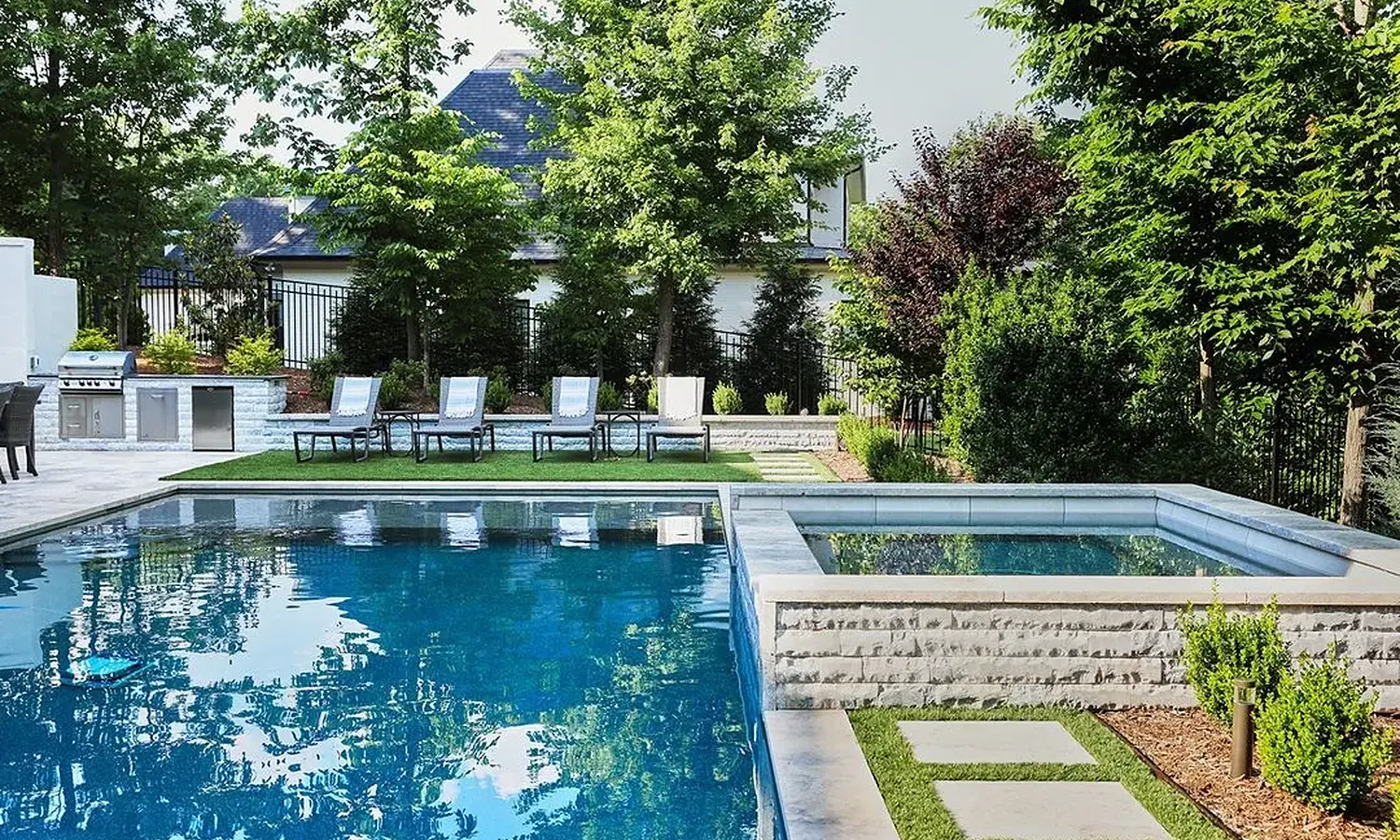
Gunite gives you the most freedom. You can work with a designer to create the exact shape you want.
That could be a clean rectangle, a soft curve, or something completely unique to your home. You also choose the depth, steps, seating, and layout.
Gunite also works well for features like:
- Larger or longer pools
- Custom spas and spillovers
- Raised walls and water features
- Built-in benches and seating
- Detailed tile work
- Pools that need to fit around tricky yard shapes
If you want a pool that feels designed for your property, gunite is hard to beat. Our pool design process uses detailed 3D renderings, so you can see your pool, patio, landscaping, and outdoor kitchen together before we break ground.
Fiberglass Pools
Fiberglass pools come in many nice shapes, but the choices are fixed. The size is also limited by what can be moved on a truck and carried into your yard.
That means very large pools and highly custom layouts are harder to do. Adding features after the shell is chosen can also be limited.
If you find a shape you love and it fits your yard, fiberglass can work well. Just be honest about whether the available options match what you really want.
Installation and Build Time
How a Gunite Pool Is Built
A gunite pool is built step by step on your property. The typical process looks like this:
- Design and planning
- Permits
- Excavation
- Steel framework, plumbing, and electrical
- Shotcrete or gunite application
- Curing time
- Tile, coping, and finish work
- Fill, water balancing, and start-up
Because the shell is formed on site and needs time to cure, a gunite pool usually takes longer once construction begins. The tradeoff is that you get a pool built exactly the way you want it.
How a Fiberglass Pool Is Installed
With fiberglass, the shell is already made. There is no forming or curing of a concrete shell on site. The hole is dug, the shell is set in place, and the rest of the work is finished around it.
This can make the shell installation shorter. But the full project still includes design, permits, excavation, plumbing, electrical, decking, and landscaping.
Also, the shell must be delivered in one piece. Your yard access matters, since heavy equipment may be needed to place it.
Surface and Feel
Gunite Surface
A gunite pool needs an interior finish applied over the concrete. Common options include plaster, pebble-style finishes, and other specialty surfaces.
These finishes give you many choices in color and look. Some feel more textured underfoot than fiberglass. The finish is a big part of how your pool looks, so take time choosing it. Over the years, the surface may need to be refinished.
Fiberglass Surface
A fiberglass pool has a smooth coated surface. Many people enjoy how it feels on bare feet and skin. Color choices are usually more limited than with custom finishes. But the surface is clean and simple, and many homeowners like that.
Maintenance and Upkeep
Both pool types need regular care. You need to balance the water, clean the pool, and maintain the equipment, no matter which one you choose.
The main difference comes from the surface.
Gunite pools have a more textured surface. This can hold onto dirt and algae more easily, so they may need more brushing and attention to water balance. The interior finish also wears over time and may need resurfacing.
Fiberglass pools have a smooth surface that tends to resist algae better. Many owners find routine care a bit easier.
Neither choice means a pool without work. If you also want help with the space around your pool, our landscape maintenance programs keep your whole backyard looking healthy year round.
Durability and Lifespan
Gunite
A well-built gunite pool has a strong shell made of steel-reinforced concrete. When the work is done right, the shell can last a very long time.
Over the years, the parts that usually need attention are the interior finish, tile, coping, and equipment. The shell itself is not usually the issue.
Quality depends heavily on the builder. The steel layout, plumbing, concrete work, and finishing all matter. Our pools are engineered for long-term performance, and every detail from the plumbing layout to the surface materials is selected and installed for durability, beauty, and efficiency.
Fiberglass
Fiberglass shells are made in a controlled factory setting, so the quality can be consistent. The material also has some flexibility.
The installation matters a lot. The hole must be prepared well, and the shell must be properly supported and backfilled.
Since the shell is one piece, a serious shell problem can be harder to fix. Ask about warranty coverage and who stands behind it before you decide.
Gunite vs Fiberglass Pool: Side-by-Side Comparison
Here is a quick look at how the two pool types compare.
How It Is Made
- Gunite: Concrete is sprayed over a steel frame on your property.
- Fiberglass: A pre-made shell is delivered and set into the ground.
Shape and Size
- Gunite: Fully custom.
- Fiberglass: Limited to the shapes and sizes available.
Surface
- Gunite: Plaster, pebble, or other finishes.
- Fiberglass: Smooth coated surface.
Features
- Gunite: Very flexible, including spas, spillovers, and built-in seating.
- Fiberglass: More limited by the shell design.
On-Site Build Time
- Gunite: Longer, because the shell needs time to cure.
- Fiberglass: Often shorter for the shell installation.
Upkeep
- Gunite: May need more brushing, and the finish may need resurfacing over time.
- Fiberglass: Often easier to keep clean.
Best For
- Gunite: Custom designs and larger pools.
- Fiberglass: Simpler designs and standard shapes.
Final Thoughts
When you compare a gunite vs fiberglass pool, the big question is how much freedom you want.
Gunite gives you a fully custom pool shaped to your yard. It has room for spas, spillovers, seating, and detailed finishes. Fiberglass gives you a smooth, ready-made shell in a set shape, which some homeowners find simple and appealing.
If you want a pool designed around your lifestyle, a custom shotcrete or gunite pool is worth a close look. Visit our luxury pools page to learn more, or read about our team and process.
Ready to talk about your backyard? Request a consultation or call us at (919) 234-7888. You can also browse our news and articles for more outdoor living ideas.
Frequently Asked Questions
Is gunite the same as shotcrete?
They are very close. Both are concrete sprayed over a steel frame to form the pool shell. The main difference is how the concrete is mixed and applied. Our custom pools use shotcrete or gunite to create a strong, permanent shell, and you can learn more on our luxury pools page.
Which pool is better for a custom backyard design?
Gunite is usually the better choice for custom designs because the shell is formed to fit your plan. You can choose the shape, depth, steps, and features that suit your family and your yard. Our pool design service uses 3D renderings, so you can see your pool and backyard together before construction begins.
Which type of pool takes less time to install?
Fiberglass shells are made in advance, so the shell installation on site is often shorter. A gunite pool needs time for forming and curing. Either way, you still need design, permits, excavation, and finish work, so your full timeline depends on the project. If you want a realistic schedule for your property, contact our team.
Which pool needs more maintenance?
Both pools need regular care, including cleaning and water balancing. A gunite surface is more textured, so it may need more brushing, and the interior finish may need resurfacing over time. A fiberglass surface is smooth and often easier to keep clean. We also offer landscape maintenance programs to keep the area around your pool looking its best.
Can I add a spa, spillover, or water feature to my pool?
With a gunite pool, yes. These features can be built right into the design, so everything fits together. Fiberglass options are more limited because the shell is already made. You can see an example in our Edinburgh Drive pool and spillover spa project, or browse more ideas in our portfolio.
What do I need to know before building a pool in Raleigh?
Raleigh requires building and electrical permits for pools holding more than 24 inches of water. A 48-inch fence is also required around any pool deeper than 24 inches. Pools cannot be placed over public sewer or drainage easements, and HOA rules and soil conditions can affect your project too. We review all of this during our initial site visit, so you know what to expect. Reach out to schedule a visit.

