


If you are thinking about adding a pool to your backyard, one of the first questions you probably have is simple: how long does it take to build a pool?
The honest answer is that it depends. A pool is not a product you pick up and install in a weekend. It is a construction project that starts with a design, moves through permits and approvals, and ends with water in the shell and your family ready to swim. Each step takes time, and some steps depend on weather, inspections, and the choices you make along the way.
In this guide, we break down the full timeline in plain language. You will learn what happens at each stage, how long each stage can take, what slows a project down, and what you can do to keep things moving. We also share what homeowners in Raleigh and the Triangle should know about local conditions.
The Short Answer: How Long Does a Pool Take to Build?
Many custom inground pools take roughly three to six months from the first design conversation to the first swim. Actual construction, meaning the time crews spend on your property, is often only a portion of that. The rest is spent on design, planning, permits, and scheduling.
Keep in mind that these numbers are general estimates. A simple pool with a basic deck will move faster than a large pool with a spa, water features, an outdoor kitchen, and a full landscape plan. Your own timeline will depend on your property, your design, your permit process, and the season.
At Currin Outdoor Living, we are upfront about timing from the start. Once you have a signed contract, we are typically at least 60 to 90 days out from starting construction. Your build timeline then depends on the scope of your project, the weather, and permitting. During planning, we give you a realistic schedule and stay in close contact with you through the entire pool build process.
Why Pool Timelines Vary So Much
If you have asked three people how long their pool took, you probably got three different answers. That is normal. Here are the main reasons timelines are different from one project to the next.
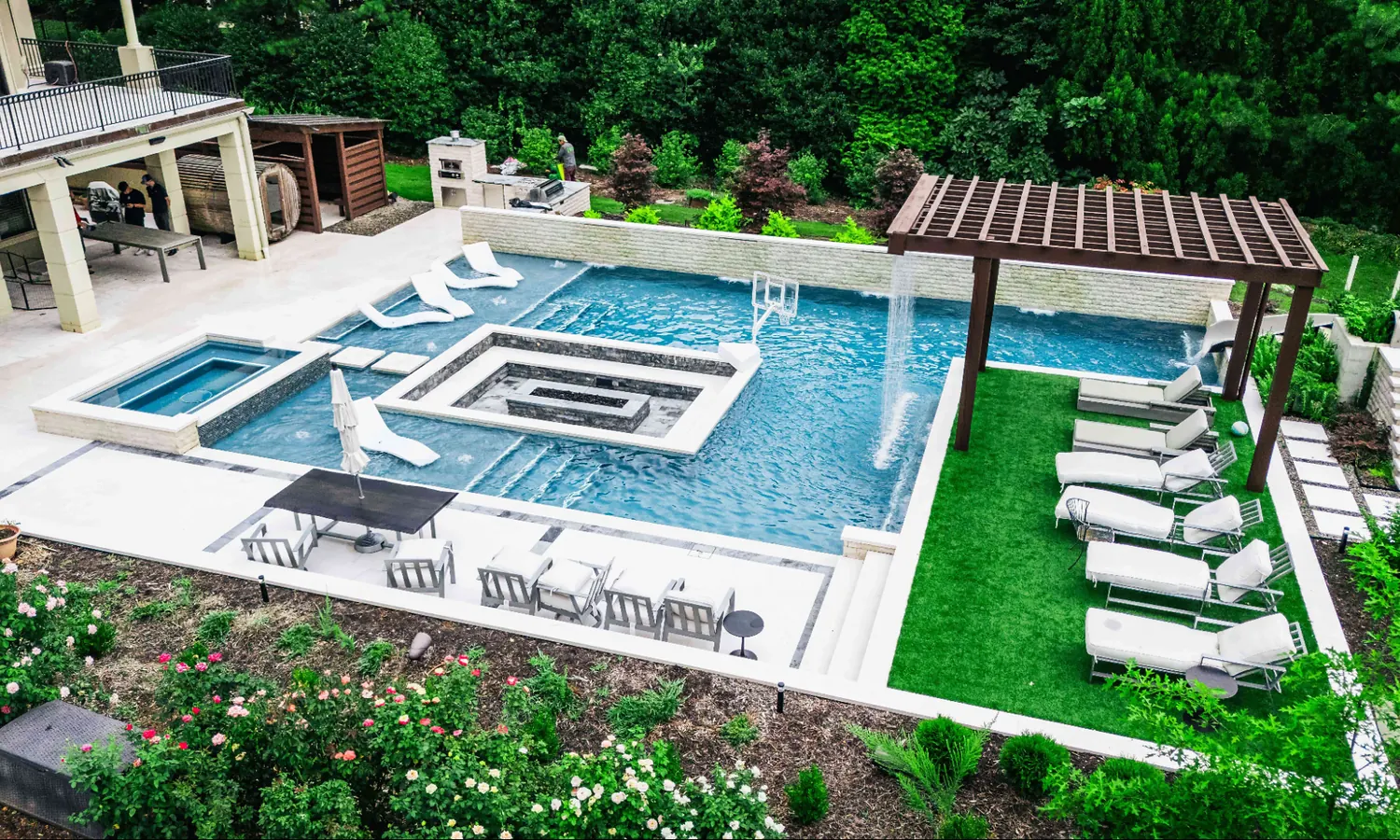
Pool size and shape. A larger pool with curves or custom shapes takes more time to excavate, form, and finish than a smaller, simple one.
Extra features. Spas, spillovers, water features, built-in seating, and lighting all add steps. Each feature needs planning, installation, and testing.
The type of pool. Concrete pools built with shotcrete or gunite take longer than some other pool types because the shell needs to be formed and cured. They also offer the most freedom with shape and size, which is why many homeowners choose them for custom projects.
Your property. Slopes, tight access, rocky soil, drainage concerns, and easements can all change how the work is done and how long it takes.
Permits and approvals. The time it takes for your town or city to review and approve your plans can range from quick to quite slow.
Weather. Heavy rain can pause excavation and concrete work. Extreme cold can also affect certain steps.
Your decisions. If you take time choosing tile, coping, or finishes, the schedule shifts. Quick decisions keep the project moving.
The Pool Building Timeline, Stage by Stage
Let us walk through each phase of a typical custom pool project. The time ranges below are general guides, not promises, since every project is different.
Stage 1: Initial Consultation and Site Visit
Every project begins with a conversation. You share how you want to use your backyard, who will use the pool, and what you love or want to avoid. A designer visits your property to look at the space, the slope, the access points, and anything that could affect the build. This stage is usually quick, often just a few days to a couple of weeks depending on scheduling. It is also the best time to ask about budget, timing, and what to expect. If you would like to start this conversation, you can contact our team to request a consultation.
Stage 2: Pool Design
Design is where your idea becomes a real plan. A good design looks at much more than the pool itself. It considers the shape and size, the deck or patio, steps and seating, lighting, planting, and how everything connects to your home. At Currin, we use detailed 3D renderings so you can see your pool and backyard before any digging begins. You can learn more about how this works on our pool design page. Design can take anywhere from a few weeks to a couple of months. Simple projects move faster. Larger projects with many features, or those where you want to try several ideas, take longer. This is time well spent. A clear design helps prevent changes during construction, and changes during construction are one of the biggest causes of delays and added cost.
Stage 3: Contract and Scheduling
Once you approve the design and sign the contract, your project goes onto the build schedule. Good pool builders are in demand, especially in growing areas like the Triangle, so there is often a waiting period before work starts. On our end, we are typically at least 60 to 90 days out from starting construction after a signed contract. This waiting period is normal in the industry, and it gives time for permits, planning, and ordering materials.
Stage 4: Permits and Approvals
Before any digging starts, your project needs permits. This part of the process is often the most unpredictable because it depends on the local office reviewing your plans.
In Raleigh, building and electrical permits are required for pools holding more than 24 inches of water. Depending on your project, you may also need plumbing permits, a property survey to confirm easements, and a stormwater review if you are adding a large amount of hard surface like decking or patios. Homes in historic districts need additional approval. This is one reason hiring a local builder helps. We understand local permitting requirements and handle this paperwork for you, which helps reduce delays and keeps timelines more predictable. Permit review can take from a couple of weeks to several weeks. If a plan needs corrections, it can take longer.
Stage 5: Pre-Construction Walkthrough
Before work begins, we do a pre-construction walkthrough with you. We review your 3D design and the site preparation plan together. This is where we confirm the pool layout, access routes for equipment, and any details about protecting your yard. This step only takes a short visit, but it makes the rest of the build smoother because everyone knows the plan.
Stage 6: Excavation and Site Work
Now the visible work begins. Crews mark the pool outline and dig the hole. Heavy equipment moves in, soil is removed, and the shape of your pool starts to appear.
Excavation often takes a few days to a week or so, though this can stretch if there is rain, rock, or tight access that makes the work harder. This is also when surprises can show up. Rocky ground or high groundwater, for example, may require extra steps. Experienced crews who know local soil conditions can plan for these problems before they become big delays.
Stage 7: Structure and Systems Installation
After the pool is dug, the structure and systems go in. This includes reinforcing steel that forms the skeleton of the pool, plus plumbing and electrical work. This stage matters a great deal because most of it will be hidden once the pool is finished. The plumbing layout affects how well your pool circulates and how efficiently it runs. The steel and forming determine strength and shape. This phase often takes one to two weeks, and inspections may be required before moving forward. If an inspector cannot visit right away, work may need to pause until approval is given.
Stage 8: Shotcrete or Gunite Application
This is the step where your pool shell is created. Shotcrete or gunite is sprayed over the steel framework to form the permanent shell of the pool.
The application itself is usually quick, often completed in a day. After that, the concrete needs time to cure so it can reach its full strength. Curing takes time and cannot be rushed, so the schedule allows for it before the next steps begin.
At Currin, our crews handle excavation, plumbing, electrical, forming, and finishing. The pool shell is built by our trusted construction partner, and we manage that work directly so you have one team overseeing the project.
Stage 9: Tile, Coping, and Finish Work
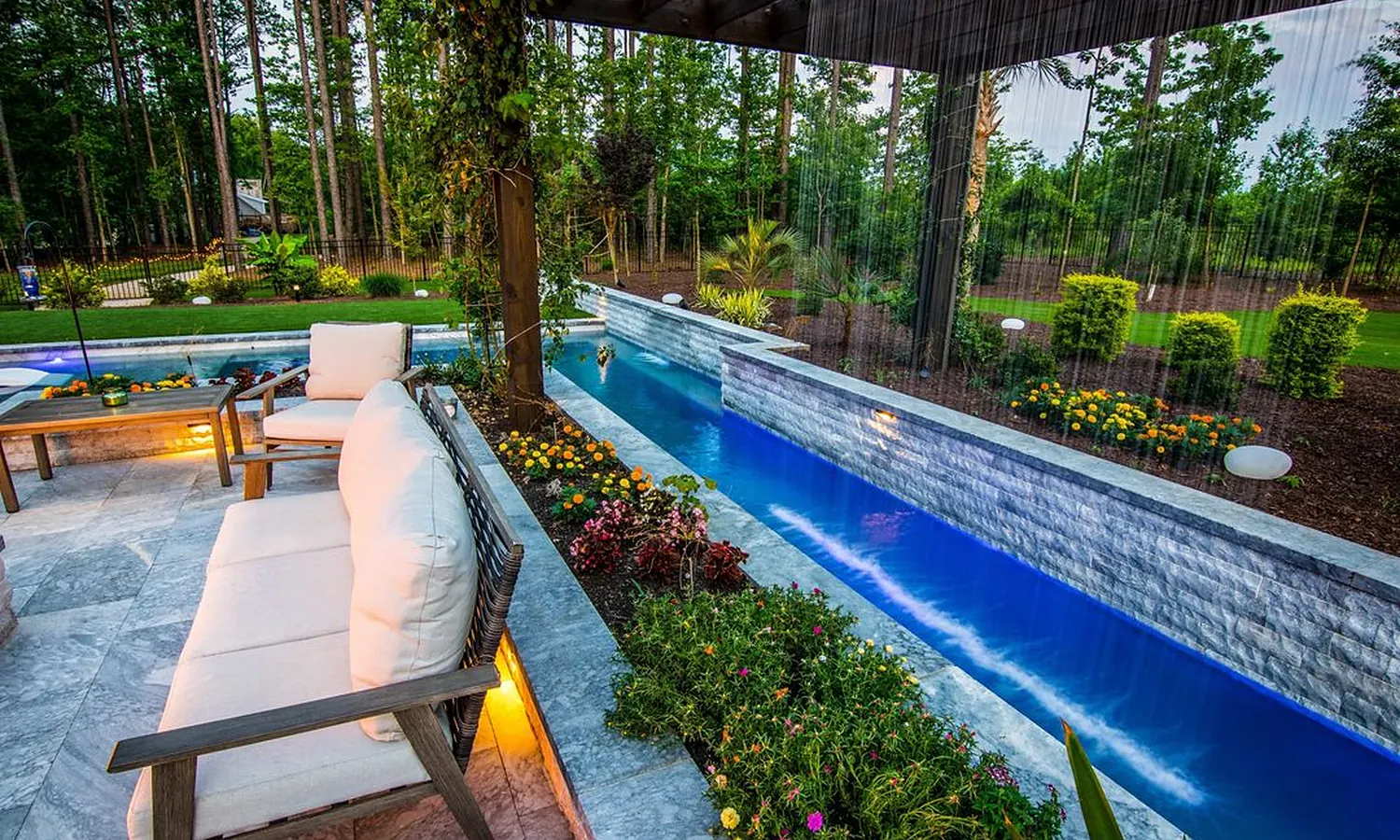
Once the shell has cured, the finishing begins. This is when your pool begins to look like the design you approved. Tile is installed at the waterline, coping goes around the edge, and the interior surface is applied. This stage often takes a couple of weeks, sometimes more, depending on the materials you chose and how detailed the design is. Custom stonework, mosaic tile, and special finishes can take extra time. If you are also adding a patio, outdoor kitchen, or fire feature, that work often overlaps with this phase. You can see what is possible on our pages for custom patios, outdoor kitchens, and fireplaces and fire pits.
Stage 10: Pool Start-Up and Orientation
The last step is filling the pool, balancing the water, and starting the equipment. We then give you a hands-on orientation so you understand how your pool systems work, how to care for the water, and what to do day to day. Start-up usually takes a few days, including filling time. After that, you are ready to swim.
What Slows Down a Pool Build?
Even a well-planned project can run into delays. Knowing the common causes helps you prepare and respond calmly if one comes up.
Weather. Rain is the biggest one. Wet ground is hard to dig, and concrete work depends on dry conditions. A rainy stretch can push a schedule back by days or weeks.
Permit delays. If your local office is busy or asks for revisions, your start date can move.
Inspection timing. Many steps require approval before work can continue. If an inspection is delayed, the crew may need to wait.
Design changes. Adding a spa, changing the shape, or switching materials after work starts can cause rework and wait times for new materials.
Material availability. Some tile, stone, and equipment items can take weeks to arrive. Ordering early helps.
Site problems. Rock, groundwater, buried utilities, or tight access can require extra work.
HOA approval. If your neighborhood has an HOA, you may need approval before work begins. It is smart to start that process early.
How Building Season Affects Your Timeline
Many homeowners want to swim by early summer, so spring is the busiest time for pool builders. If you wait until spring to start the process, you may find that schedules are already full.
A better approach is to start planning well before the warm months arrive. Design, permits, and scheduling take time, and starting early means you can be near the front of the line when the weather is right for construction. In the Triangle, construction can often continue through much of the year, so starting your design in the cooler months can help you be ready to build when your slot opens.
If you want your pool ready for a specific season, tell your builder early. We will give you an honest view of what is realistic.
Frequently Asked Questions
How long does it take to build a pool from start to finish?
Many custom inground pools take about three to six months from the first design conversation to the first swim, though larger or more detailed projects can take longer. Your timeline depends on the pool design, permits, weather, and the features you choose. To get a realistic estimate for your property, contact our team.
How long does the actual construction take?
Construction time is only part of the full timeline. Once crews begin, the work moves through excavation, structure and systems installation, shotcrete or gunite application, curing, tile and finish work, and start-up. You can see each stage on our pool building page.
How long does it take to build a pool in Raleigh, NC?
Once you have a signed contract, we are typically at least 60 to 90 days out from starting construction. The build timeline then depends on scope, weather, and permitting. We give you a realistic schedule during planning and keep you updated as the work moves forward. Learn more about our local work on our Raleigh pool builder page.
Why does it take so long before construction even starts?
Before digging begins, your project needs a design, a contract, permits, and a spot on the build schedule. These steps protect you and help the build go smoothly. Our pool design process is where the planning starts, and a clear design helps avoid delays later.
What permits do I need to build a pool in Raleigh?
Raleigh requires building and electrical permits for pools holding more than 24 inches of water. You may also need plumbing permits, a property survey for easement checks, and a stormwater review if you add a lot of hard surface. Homes in historic districts need extra approval. We handle this for you as part of our pool building service.
Does weather affect how long a pool takes to build?
Yes. Rain can pause excavation and concrete work, and wet ground can slow progress. Because we are familiar with Raleigh conditions and seasonal timing, we plan around the weather as much as possible. Talk with us early through our contact page if you have a target date in mind.
Will adding a patio, outdoor kitchen, or fire pit make the project longer?
Usually, yes, because more features mean more work. The benefit is that everything is designed and built together, so the space feels connected. Explore our custom patios, outdoor kitchens, and fireplaces and fire pits to see what you might want to include.
What areas do you serve?
We are based in Raleigh and serve homeowners across Wake County and the greater Triangle, including Cary, Chapel Hill, Wake Forest, Durham, and surrounding communities. Check our service areas page to see if we cover your neighborhood.

